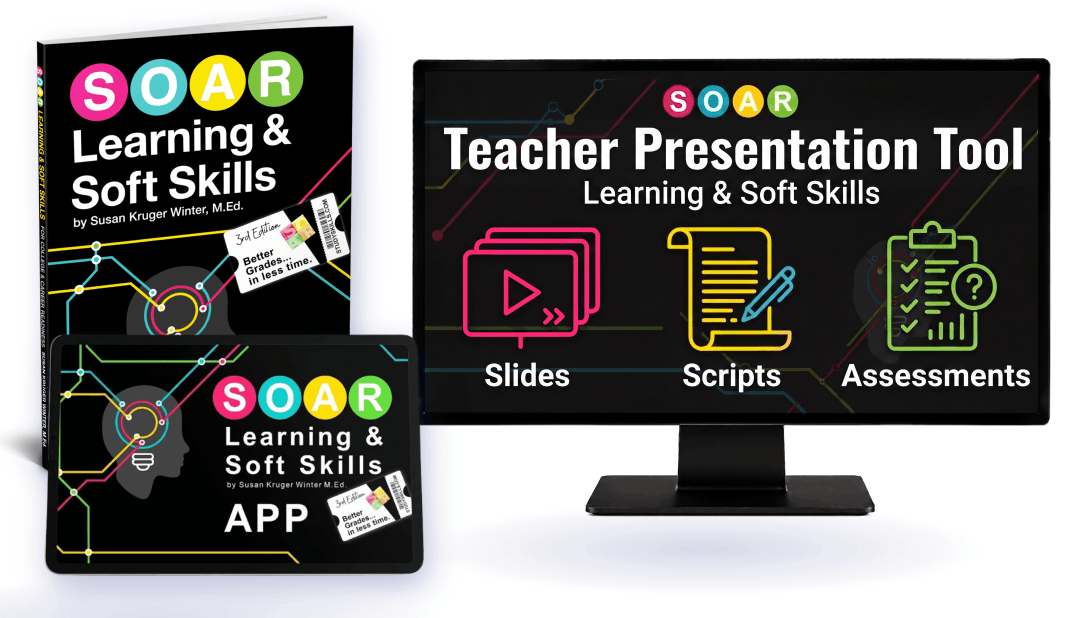
Brain-First Learning in an AI World
About Susan
About Susan Kruger Winter, M.Ed.
“America’s #1 Learning Expert”
Susan built SOAR® from her own struggles as a student — and turned those struggles into the #1 study skills curriculum in the world.
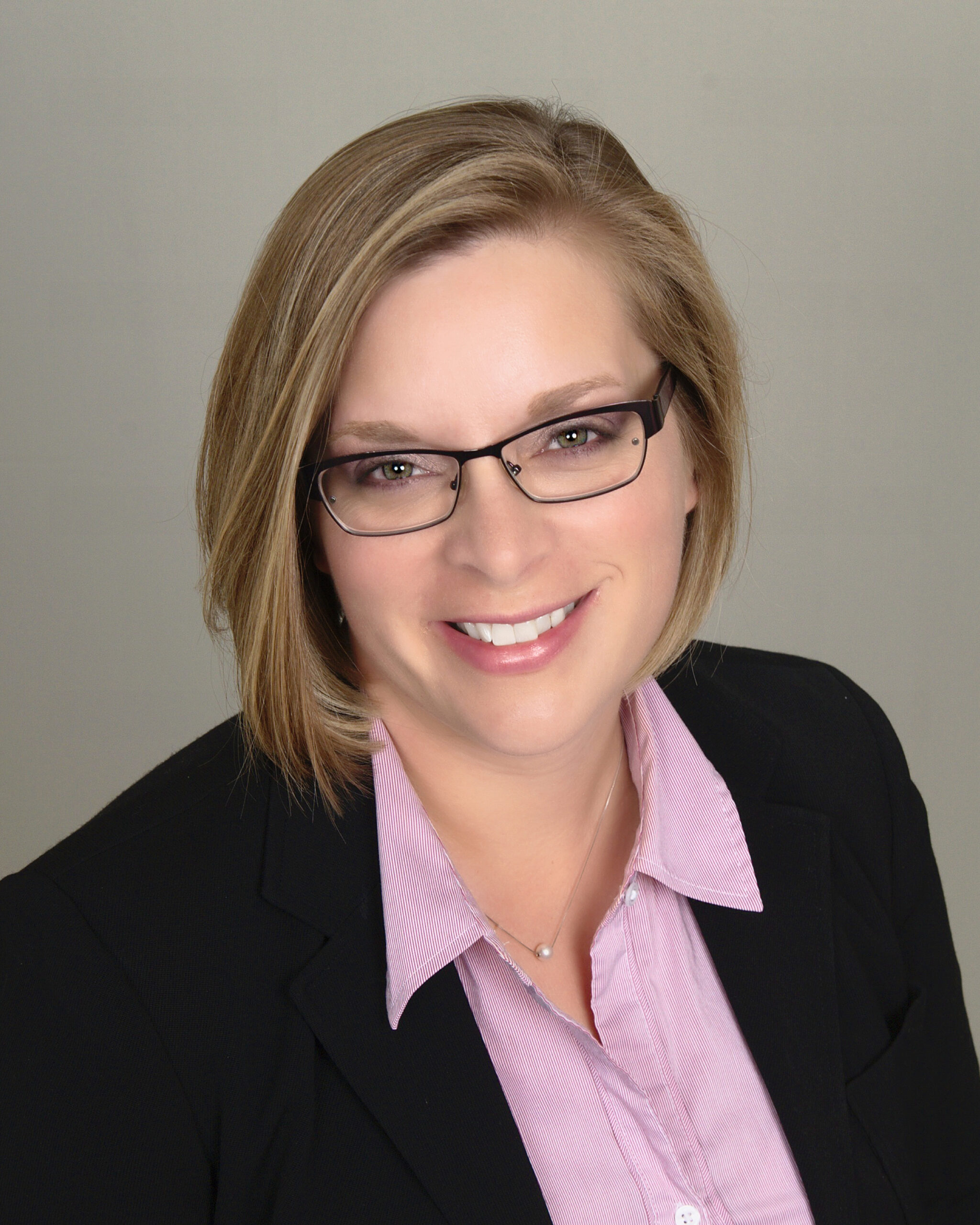
At a glance
Susan Kruger Winter, M.Ed. is a certified K–12 learning & ELA specialist with 25+ years of experience. She is the author of SOAR Study Skills, SOAR Social-Emotional Learning Skills, Homework Help for Parents, and the #1 best-selling book on literacy, Cue to Reading, and the developer of The Brain Circuit™ series of learning models. She is a Premier Instructor for The Learning Annex in NYC and the Education Expert for ADDitude Magazine. As founding CEO of SOAR Learning, Inc., she has grown the curriculum to 5,100+ schools across 53+ countries. Microsoft Partners in Learning University named SOAR a “Global Expert in Education Innovation.” Susan was the top winner of the Oakland County Executive’s “Elite 40 Under 40” Award in 2014 and served on the Oakland County Executive’s Workforce Development & Advisory Board for many years since. She’s married to a fellow educator, Brian, and mom to two dynamic children with learning differences.
The full story
I was a struggling student for a very long time
Hi! I’m Susan — and my greatest asset as a teacher isn’t my training. It’s that I was a struggling student for a VERY LONG time. Always the youngest in my class, I was chronically frustrated by grades that never reflected my effort. I often felt unmotivated and, frankly… “stupid.”
Then, in my first semester of college, I figured out a handful of strategies that taught me how to study smarter, not “harder.” It sounds like a cliché. It wasn’t. I earned a 3.9 that semester — and I was stunned that those grades came easier than the mediocre ones I’d fought for in high school.
Once the shock wore off, I was angry. I sat in a campus lounge one day, bracing for a project, when I caught myself: Wait. You know how to do this now. And right behind that relief came the anger — why did I ever have to struggle in the first place? The “hacks” that changed my life were simple enough for a 5th grader. Nobody had ever taught me how to learn.
I couldn’t change my own past, but I could change the future for someone else. I put a stake in the ground that afternoon: get these skills into the hands of as many students as possible. I was already in the college of education, following a lifelong pull toward teaching. That moment just set the compass.
Study skills
My work with study skills
Since 1996, I’ve taught thousands of students how to succeed in school, find real confidence in themselves, and still have time for fun. I started tutoring study skills one student at a time, but demand outgrew that fast, so I built workshops — and those drew attention from schools, parents, and media.
In 2007, my husband Brian —a fellow educator— and I converted those workshops into a book and a full curriculum. It has been the best-selling study skills program in the world ever since, which I still find mind-boggling.
Today our programs reach schools and families around the world. Students discover how to build confidence and succeed. Families tackle homework without the conflict. Teachers hand their students strategies that last a lifetime.
The neuroscience
My work with the brain
Years later, my son’s academic challenges pulled me into the neuroscience of learning. I needed to understand why capable, motivated students still struggle. What I found reframed everything we do: the problems that look like “laziness,” “lack of aptitude,” or simply “struggle,” are almost always executive function gaps — invisible skills nobody ever taught.
That work became The Brain Circuit™ series — animated models that make the mechanics of learning visible, including The Learning Circuit, The NeuroReading Circuit, and The ADHD Circuit. Explore The Brain Circuit™ series →
It’s also why we say comprehension matters more in an AI world, not less. Our mission is protecting and strengthening the brain that reads, learns, and thinks.
Social-emotional learning
My work with social-emotional learning skills
In 2017, after twenty years of coaching students, parents, and teachers on learning skills, I recognized a calling in social-emotional skills. For two decades we’d worked around the same roadblocks — students who seemed unmotivated, parent-child battles over school, apathy toward learning itself — and every one of them is rooted in an emotional barrier. Noticing them became automatic; we’d address the root before ever teaching a single study skill.
In retrospect, building a social-emotional curriculum should have been obvious years earlier. It took two devastating situations, involving two people close to me, to see it. The circumstances were completely different. They had one thing in common: no skills for handling difficult emotions. One family was destroyed. One life fell into the long battle of addiction.
It may sound trite to reduce that much damage to “a lack of emotional skills.” But I knew both sides of both conflicts, and both were triggered by confusion and anger — a tangle of feelings nobody had words for, an apology nobody knew to offer.
That helplessness kicked me into gear, the same way study skills did decades earlier. Together with Brian — a nationally board-certified teacher, and THE one his former students still call for life advice — we built the SOAR Social-Emotional Learning Skills curriculum, and we put our whole hearts into it.
Beyond work
My life & family

When I’m not “working,” I want to be on or in the water. Our town has 42 lakes, so it’s not hard. Stand-up paddleboarding is my favorite — peaceful, and a new adventure every day because the water is never the same twice. I also love dragging my family to swimming holes to jump off our boards and knock each other in. In cold weather we lean into “hygge”… while I count the days back to open water.
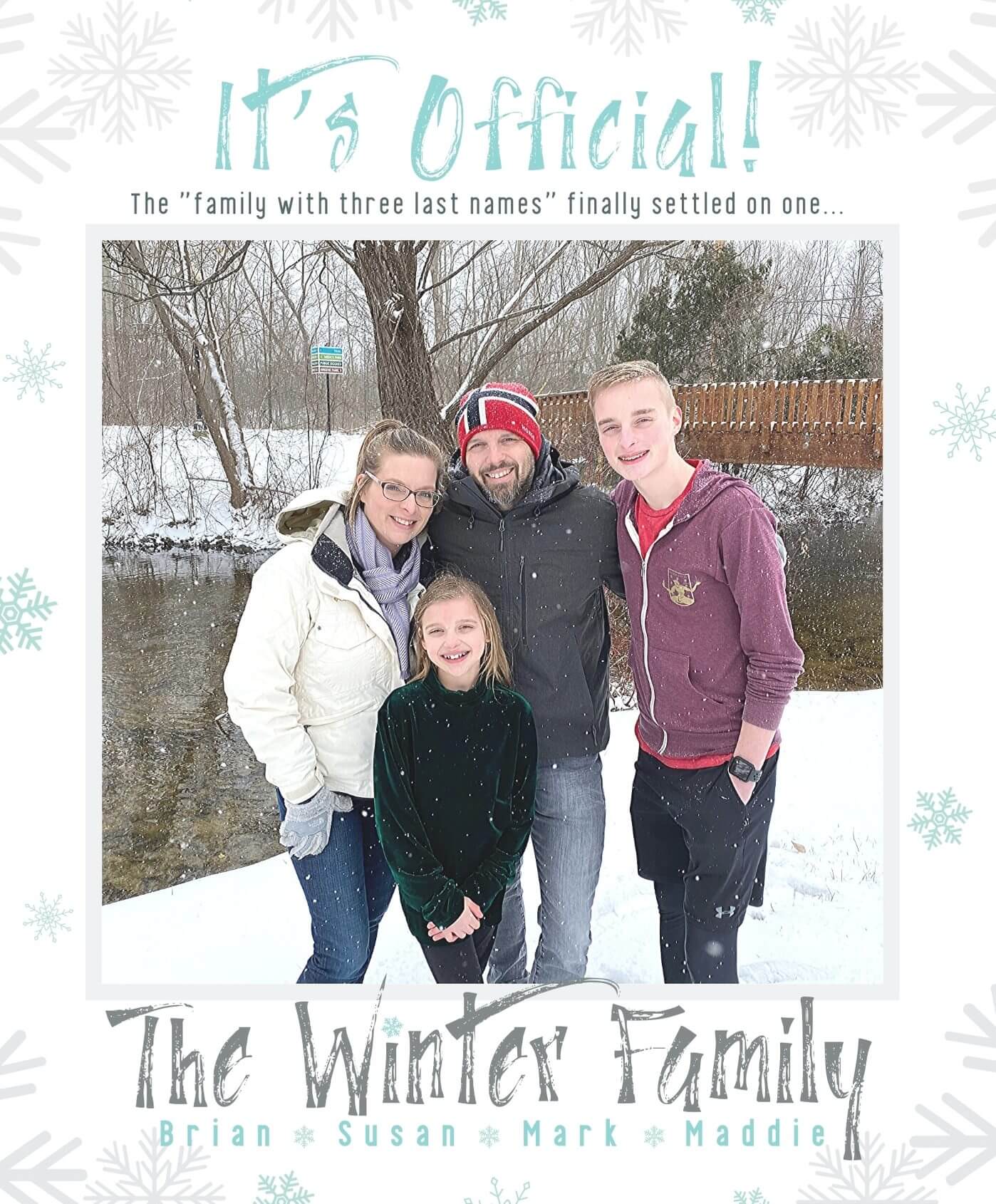
In 2020, we legally changed our family’s last name to “Winter.” For 21 years I used my maiden name and Brian used his mother’s — a necessary workaround because his given surname was a compound of two words instantly blocked by school firewalls. (Let’s just say that with our audience being 6th–12th graders, it was not a name to print on the covers of our books. 😉)
“Winter” preserves everyone’s initials. It nods to Brian’s family and my Norwegian roots. And it finally puts this “family of four with three last names”… under one!
Where to next
Ready to see the work itself?
Educators: start with the educator hub or go straight to What Is SOAR?
Parents: begin at the parent hub, or consult with Susan directly.
Curious about the models? Explore The Brain Circuit™ series →