Welcome, Students!

Susan Kruger, founder of SOAR®, believes study skills should help you earn better grades in LESS time…and without frustration.
Dear Student,
I struggled in school! K-12 was a serious challenge for me. I had no confidence. Frankly, I felt “stupid.” But, my life changed when I figured out how to learn.
I went from struggling in K-12 to getting straight A’s in college…and college was a lot easier! My confidence soared! I discovered that I wasn’t “stupid” after all. Instead, I had the power to do anything I wanted to do!
However, one day, I was suddenly hit with a deep sense of anger. “Why didn’t someone teach me how to learn earlier?!” I wondered in frustration. The strategies helping me get straight A’s in college would have been just as helpful in middle and high school! I thought about the years of misery, the hundreds (or thousands?) of dismal hours of homework, and all of the tears shed in frustration. Realizing that those challenges could have been avoided made me angry.
I tried to tell myself there was no sense getting angry over the past. But this logic was not enough to erase the deep frustration. My heart and mind were engaged in a very intense wrestling match.
Suddenly, I had the most defining moment of my life. The inner turmoil settled right down.
No, I couldn’t change the past. But I could change the future for others! In that moment, I knew that I had an obligation to future students to unlock the mysteries of learning. And that’s what I’ve been doing ever since.
It turns out, these strategies are helpful for all students: if you already get straight A’s, this app will show you how to do it with less stress. These strategies will continue to serve you in college and the workplace!
They will also help you earn good money. Employers list these skills as their “most needed.” Yet they have a difficult time finding quality employees, even during a severe recession. Personally, I still use these skills. I used them to create this app and to build my business. I continue to use them every day at work and to manage my life and family at home.
If you use the information in this app to improve your life in any way, you will have made all of my frustration worthwhile. I hope you will seize this opportunity to change your life forever!
Most sincerely,

Warning About Study Skills!
The study skills you will find in most other resources are confusing. They are usually very time-consuming and/or for very specific situations…which makes them very confusing to you.
SOAR® strategies are carefully evaluated to ensure they are “student-friendly”. All of our strategies must meet our three criteria for being student-friendly:
- Time-efficient
- Effective
- Apply across all content areas to minimize confusion
SOAR® Learning & Soft Skills App
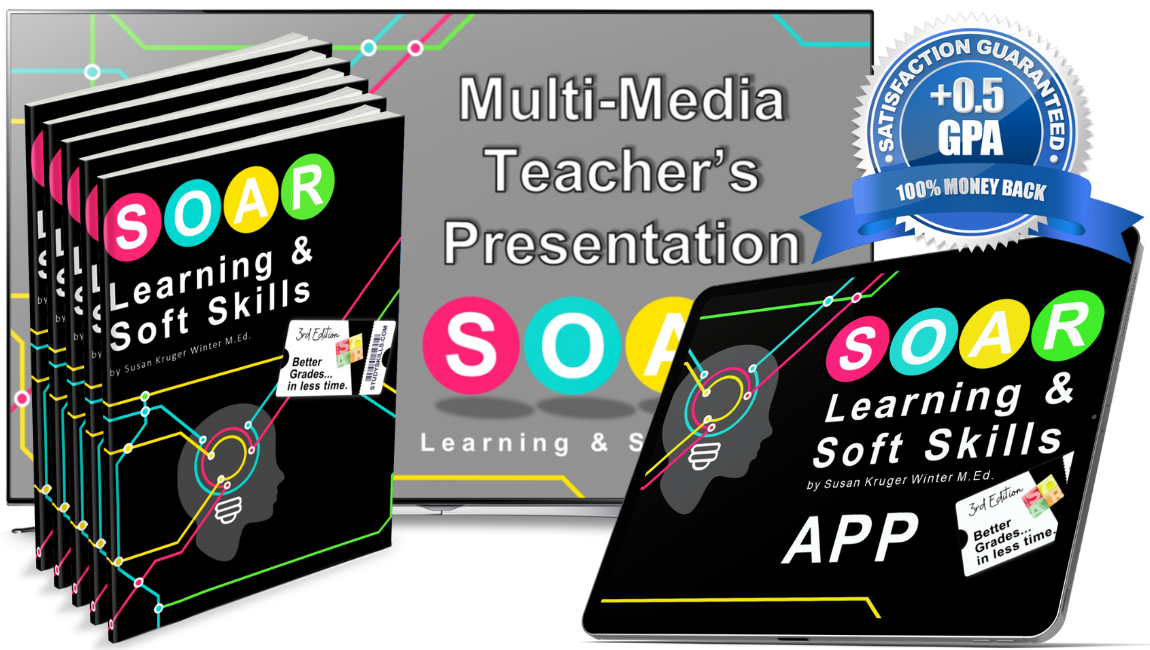
There is a solution to learn study skills at home, on your schedule, from the #1 world-wide expert in study skills. The SOAR® App covers the entire SOAR® Learning & Soft Skills workbook, presented as a self-guided course.
The Online App Includes:
- Interactive content and games
- “How-to” videos, illustrating strategies
- Fully narrated slides, for reading support
- Quizzes and assessments
- Badges and certificates awarded
- Easy access from any device
You can get your SOAR® Learning & Soft Skills App now, here!
Do your parents have questions? They can learn about the SOAR® Learning & Soft Skills App, here.
Six Steps
Conquer the Chaos
Get Our Free Guide & Information on...
 How to Organize & Motivate Students for Success
"*" indicates required fields
Get Our FREE Curriculum Guide!
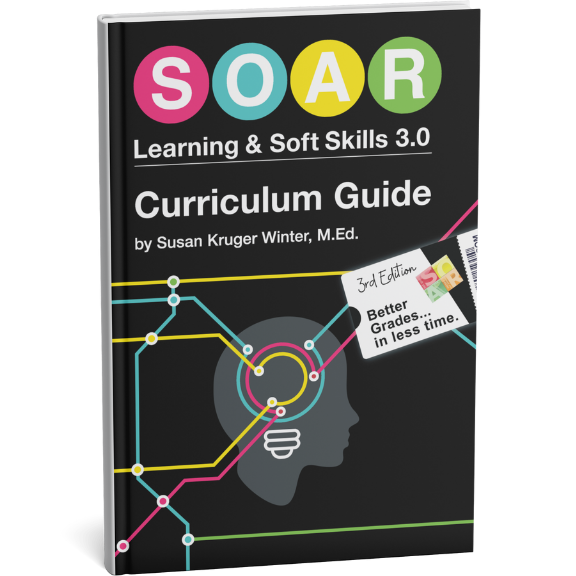
The SOAR® Curriculum
The most critical learning, organizing, and communication skills needed for school. Learn more here.
Who’s Using SOAR®?

Click here to learn more.